
Ask The Expert: 7 Things You Need to Know Before Designing Your Plant Room

As climate change becomes an increasing threat to our planet and homeowners face soaring energy costs, the ethos of the PassivHaus have never been more relevant. More of us than ever are looking to make our homes more environmentally friendly and simultaneously reduce our costs, which is why we are asked so many questions about how owning a PassivHaus can help. But what is a Passivhaus? and how does it differ from a conventional home?


A PassivHaus is a building that provides a high level of occupant comfort using very little energy for heating and cooling, due to its energy efficiency and sophisticated design. According to the PassivHaus trust, buildings are accountable for 35% of total global energy consumption. So, by reducing energy loss in the home and reducing the need to rely on excessive heating and cooling mechanisms, it becomes a positive and essential step in the fight against climate change.


Not to mention the advantages to PassivHaus owners. From extremely cheap energy bills to year-round temperature comfort and filtered air, the benefits are clear to see!


As one of the UK’s leading PassivHaus design firms, we’re here to answer your top questions about living in a PassivHaus. 

1. What are the potential health benefits of living in a PassivHaus?


One of the main benefits of living in a PassivHaus is its positive effect on its inhabitants. Whereas in a normal home, you might be battling against drafts, allergens, pollution and running cost-induced stress, when living in a PassivHaus, these issues are eliminated.
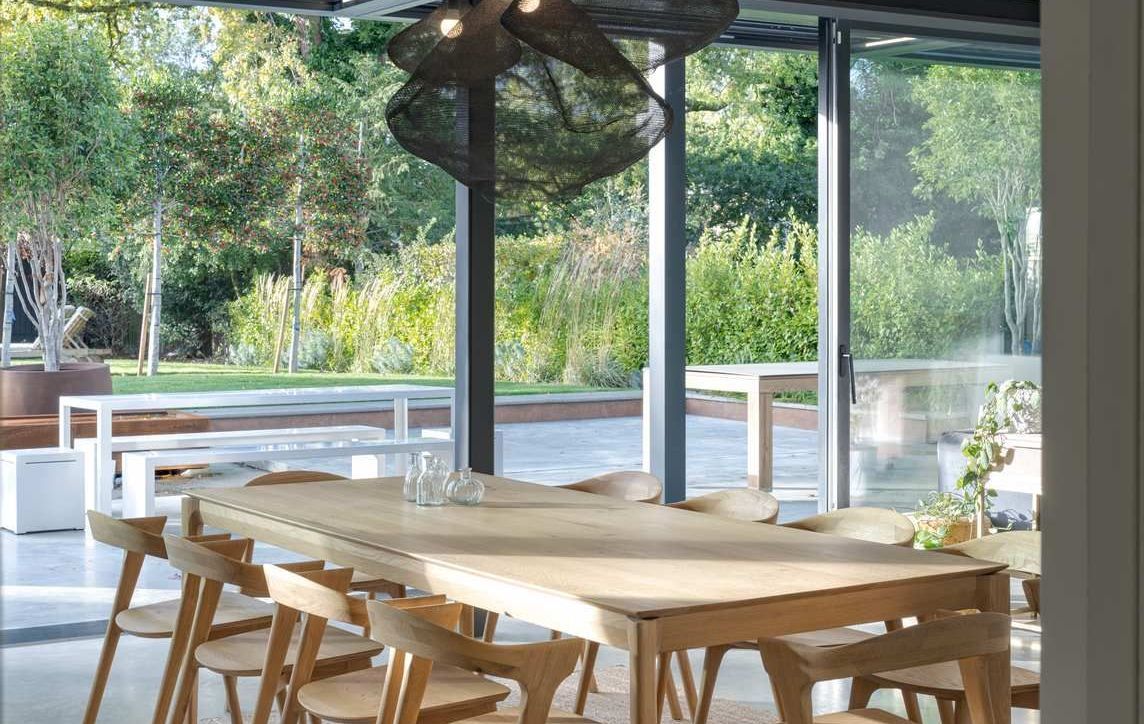


The health benefits include:


1.          Less energy use, resulting in lower bills and less stress.


2.          Filtered air, which means less allergens and less pollution.


3.          They are incredibly comfortable to live, sleep, and work in due to their consistent temperature.


In a time where more of us than ever are working from home, our immediate environment can have a huge impact on both our physical and mental health. A home that provides better air quality, a better night’s sleep and that reduces bill-related anxiety can only be a plus.


2. Can living in a PassivHaus help lower utility bills and save money in the long run?


On average a normal UK will use somewhere around 160 to 180 kwh of energy per annum per square metre to heat a building. In a Passivhaus this is reduced to below 15. This means that the energy needed to heat your home is going to be between 6-10 times less than the average home, and your utility bills will reduce drastically.


There are also home qualifications like ‘Passivhaus +’ and ‘Passivhaus ++’ whereby you can use renewable energy you generate (such as from solar panels) to supply the grid, who will then pay you back for the energy you produce. We have recently carried out projects with solar roofs which have end up helping our clients offset their winter bills within the summer months as they generate electricity.


"Designing and incorporating sustainability from day one not only saves money during the build project but also ensures long-term cost savings and sustainability over the lifespan of the building."


- Richard Dudzicki, Director and Founder of RDA   
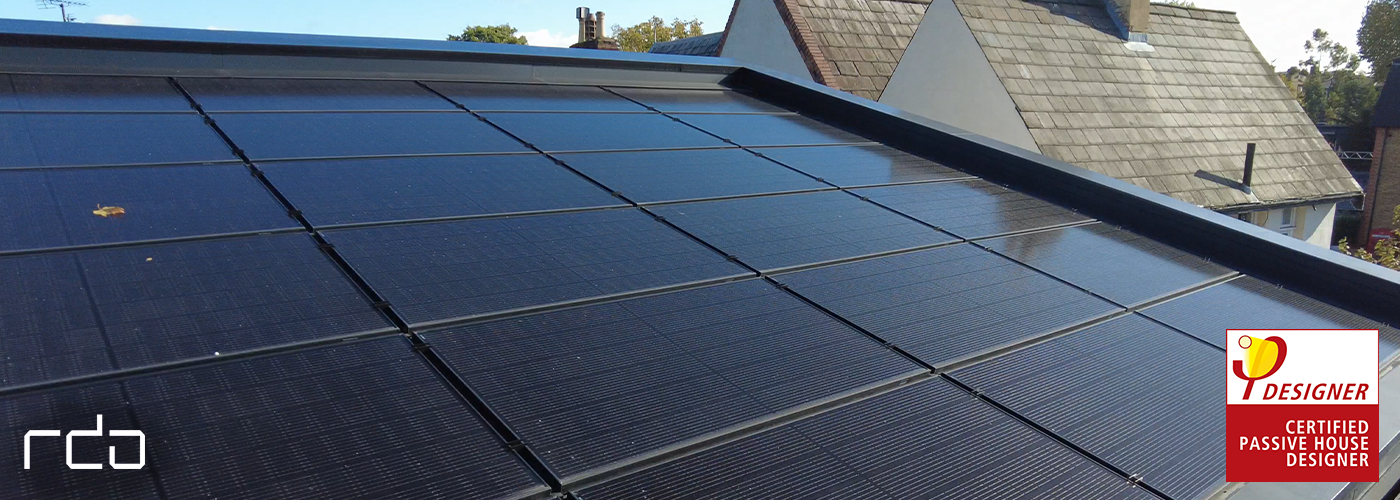

Solar panels on the roof of our Modernist EnerPHit project

3. Are PassivHauses suitable for all types of households, including families with children?


Absolutely. If anything, they are more beneficial to families with young children than standard homes.


When building a PassivHaus, the goal is to minimise using fossil fuels and potentially harmful chemicals, which makes for a healthier environment for people of all ages. At RDA we use a number of methods, from low VOC paints that don’t give off as much harmful fumes as standard paints, to wood fibre insulation to reduce lung irritation. By using natural materials as opposed to plastic-based ones, it benefits the environment and the health of your family.  


4. Can existing homes be retrofitted to meet PassivHaus standards?


Of course, any house can be retrofitted. The big drawback of this is how much it can cost to retrofit. For this, you need an expert opinion from a good architect.


Its also important to be aware that your home doesn’t have to meet rigorous PassivHaus standards to be more energy efficient. ‘EnerPHit’ is a slightly relaxed standard for retrofit projects, where the existing architecture and conservation issues mean that meeting the Passivhaus standard is not feasible.
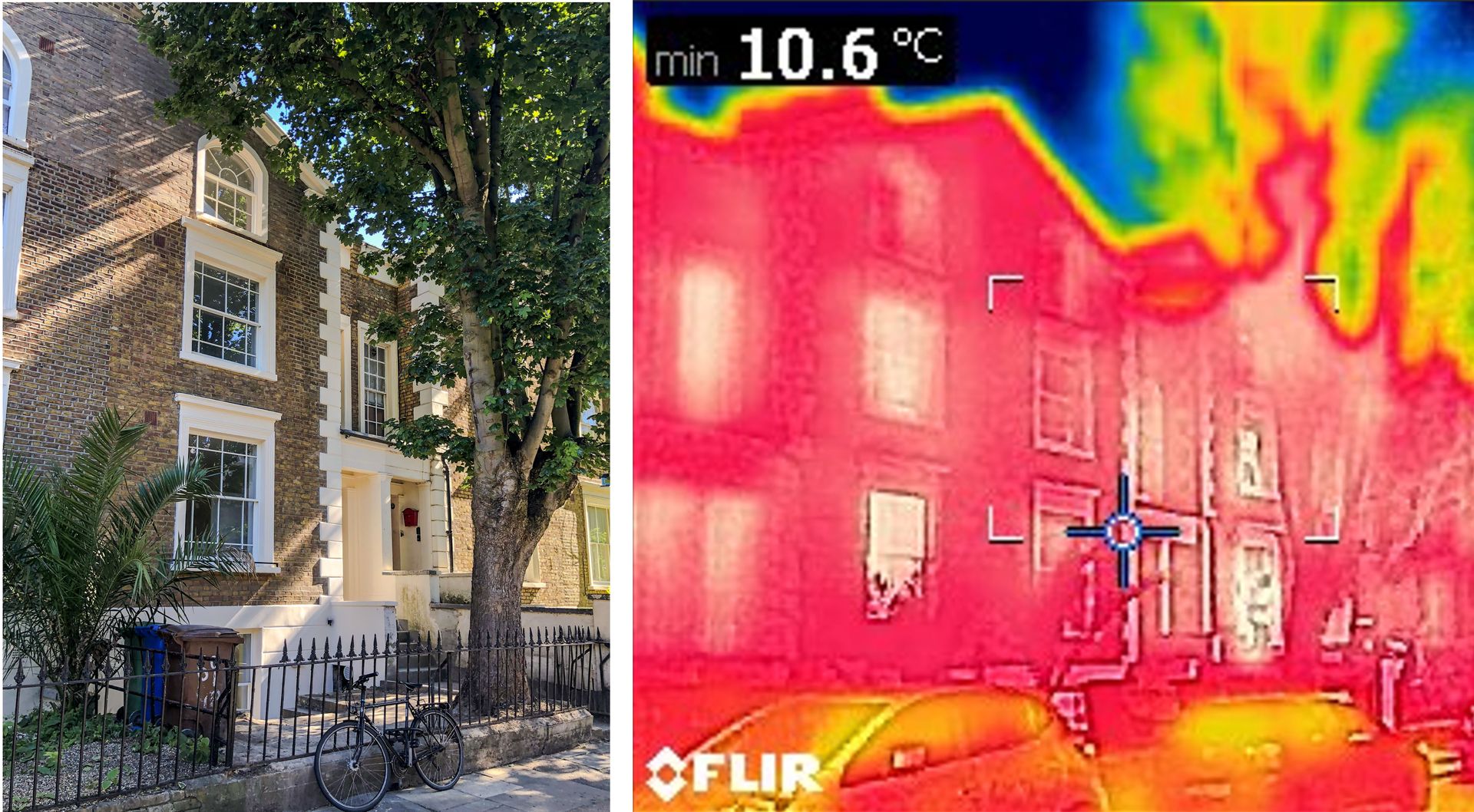


Our RetroPhit project. Thermal imaging shows how much heat escapes from neighbouring properties.


To find out more about RDA’s extensive PassivHaus experience, and to explore the beautiful homes we’ve built and retrofitted over the last twenty-five years, click here!


Or, book in a free consultation with our award-winning PassivHaus certified designer and Director, Richard Dudzicki below.


Book Your Consultation

FAQs about Passivhaus

  • How does Passivhaus work?

    A Passivhaus building will have exceptional insulation, be triple glazed, be more airtight than a typical house and will have mechanical ventilation with a heat recovery system. Internal room temperature is maintained at a comfortable level all year round. There is no draft because all the windows are sealed. My clients tell me they come into their homes, remove their shoes and walk comfortably in t-shirts. The air is clean thanks to filtered air from Mechanical Ventilation Heat Recovery Unit. This results in a healthier home.


    RDA is a leading PassivHaus design firm in the UK. 

    To get started with RDA, please schedule an “Ask the Expert” session.

  • How much energy does Passivhaus use?

    A Passivhaus energy use depends on whether it is s new built or refurbished. A new built Passivhaus spends on average 15 kwh/sqm for heating while a refurbished one consumes 25 kwh/sqm. In comparison, the average UK home yearly energy consumption is 214 kWh/m². Consequently, energy bills could reduce up to 90%.

  • Is Passivhaus worth it?

    Passivhaus helps you to have an economic house that reduces energy bills. The new Part L regulations are already very close to Passivhaus requirements, therefore with a little more upfront cost spent on services it will lead to greater savings. In addition to that, you would enjoy a healthier home with thermal control and cleaner air circulation. Passivhaus future-proofs your home.

  • History of Passivhaus?

    Passivhaus was developed by Wolfgang Feist and Professors Bo Adamson in Germany in the early 1990s.

Recent Blogs

By Richard Dudzicki March 10, 2026
On 25 March, Richard will be speaking at NLA’s Coffee Conversation about how London’s most constrained and overlooked sites can play a role in addressing both the housing crisis and the climate emergency. Across the city, small and fragmented plots are often dismissed as too difficult to develop. Backland sites, former garages and leftover spaces within established neighbourhoods are frequently overlooked by conventional development models. Yet collectively they represent a significant and largely untapped opportunity.
By Richard Dudzicki March 3, 2026
There is a particular responsibility that comes with working on an existing building. The Old Timberyard , a former Victorian workshop, offered the opportunity to demonstrate how careful retrofit can honour heritage whilst delivering genuine long-term performance. Behind its retained brickwork and historic fabric sits a carefully executed EnerPHit upgrade. This was not about surface improvements, but a rigorous, fabric-first transformation, reworking a cold, underperforming structure into a comfortable, resilient and low-energy building fit for contemporary use.
By Richard Dudzicki March 3, 2026
Three weeks ago, Heather Faulding and I had the pleasure of presenting at the NLA’s technical briefing on Retrofit and Reuse a CPD-certified webinar on low-energy & high-performance buildings. It was a fantastic session spotlighting some of the most innovative retrofit work. Heather shared her incredible project for Daily Paper in New York: a powerful example of creative reuse, transforming a crumbling structure using over 7,500 soda cans crafted by local communities. The shimmering façade reflected not only light but the heritage of African beadwork a story of culture and circularity woven into architecture.
By Richard Dudzicki March 10, 2026
On 25 March, Richard will be speaking at NLA’s Coffee Conversation about how London’s most constrained and overlooked sites can play a role in addressing both the housing crisis and the climate emergency. Across the city, small and fragmented plots are often dismissed as too difficult to develop. Backland sites, former garages and leftover spaces within established neighbourhoods are frequently overlooked by conventional development models. Yet collectively they represent a significant and largely untapped opportunity.
By Richard Dudzicki March 3, 2026
There is a particular responsibility that comes with working on an existing building. The Old Timberyard , a former Victorian workshop, offered the opportunity to demonstrate how careful retrofit can honour heritage whilst delivering genuine long-term performance. Behind its retained brickwork and historic fabric sits a carefully executed EnerPHit upgrade. This was not about surface improvements, but a rigorous, fabric-first transformation, reworking a cold, underperforming structure into a comfortable, resilient and low-energy building fit for contemporary use.
By Richard Dudzicki March 3, 2026
Three weeks ago, Heather Faulding and I had the pleasure of presenting at the NLA’s technical briefing on Retrofit and Reuse a CPD-certified webinar on low-energy & high-performance buildings. It was a fantastic session spotlighting some of the most innovative retrofit work. Heather shared her incredible project for Daily Paper in New York: a powerful example of creative reuse, transforming a crumbling structure using over 7,500 soda cans crafted by local communities. The shimmering façade reflected not only light but the heritage of African beadwork a story of culture and circularity woven into architecture.
By Richard Dudzicki February 13, 2026
We’re excited to share our refined Project Planning Pack, designed to support anyone preparing to embark on a design or building project. Planning ahead is one of the most important steps in ensuring a successful project . This clear, easy-to-follow resource helps you reduce risk , improve your design outcomes, and gain a better understanding of costs and the architect’s role in the process. It also introduces core design principles and provides tools to assess where you’re at before you begin, giving you confidence in every decision. Whether you’re a first-time homeowner, an experienced developer, or simply exploring ideas for a renovation or new build, this pack is an essential companion for your project journey. What’s included: • A structured framework to plan and organise your project • Guidance on core design principles • Insights into costs and the architect’s role • Tools to assess your project readiness We’ve refined this pack to be practical, user-friendly, and aligned with real-world architectural practice. Our goal is to give you clarity, reduce uncertainty, and make the design process as smooth as possible . Access the full Project Planning Pack here: